

More than 50% of adults aged 65 and older will require some form of long-term care assistance in their lifetime, according to data from the U.S. Department of Health and Human Services. When a parent can no longer live safely alone, the transition is often sudden, emotional, and logistically complex. Families in South Denver, Littleton, and Highlands Ranch face unique challenges regarding local community availability and care standards. This guide outlines the specific senior living options available, how to evaluate safety risks, and how to navigate the decision-making process with clarity and confidence. (Contact Harbor Senior Placement)
Assessing Safety and Care Needs
Before selecting a community, it is critical to determine the specific level of care required. Safety risks often manifest in daily activities that become increasingly difficult to manage alone. Common indicators include missed medications, difficulty with bathing or dressing, frequent falls, or signs of neglect in the home environment. (Harbor Senior Placement Senior)
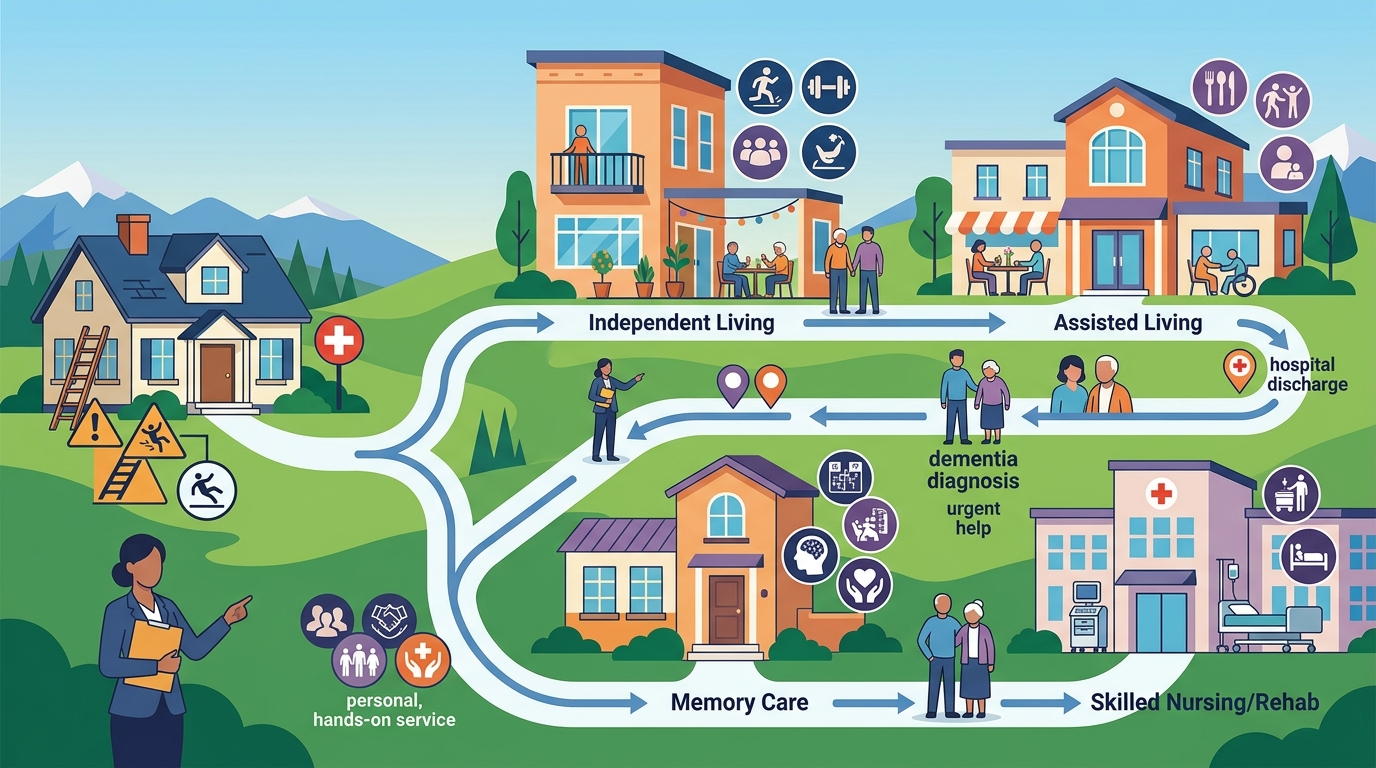
Independent Living is designed for seniors who can still manage most daily tasks but desire a more social and maintenance-free lifestyle. This option is suitable for those who are physically active but may feel isolated or overwhelmed by home maintenance responsibilities. According to the National Council on Aging, social isolation can significantly impact mental health and physical well-being in older adults. (Harbor Senior Placement Senior)
Assisted Living provides help with activities of daily living (ADLs) such as bathing, dressing, and medication management. This level of care is appropriate when a parent can no longer safely manage these tasks independently but does not require 24-hour medical supervision. The transition to assisted living often involves a shift from complete autonomy to supported independence. (Blog Harbor Senior Placement)
Memory Care is a specialized form of assisted living for individuals with Alzheimer’s disease, dementia, or other cognitive impairments. These facilities offer secure environments and staff trained in dementia care to prevent wandering and manage behavioral changes. The complexity of memory care requires a higher level of specialized support than standard assisted living.
Independent Living Communities
Independent living communities are residential settings designed for active seniors who want to reduce the burdens of home ownership. These communities typically offer apartment-style living with access to communal amenities such as dining halls, fitness centers, and organized social activities.
The primary benefit of independent living is the removal of household chores. Residents no longer need to worry about lawn care, home repairs, or cooking. This allows seniors to focus on social engagement and personal interests. However, it is important to note that independent living does not provide personal care services. If a parent requires help with bathing or medication, this option may not be sufficient.
For families in South Denver, independent living communities are often located in close proximity to medical facilities and family members. This geographic proximity is crucial for maintaining family connections during the transition. The cost of independent living is generally lower than assisted living, making it a viable option for those who are still largely self-sufficient.
Assisted Living Facilities
Assisted living is the most common choice for seniors who can no longer live alone but do not need constant medical care. These facilities provide a balance of privacy and support. Residents have their own private rooms or apartments but receive assistance with daily tasks as needed.
Assisted Living is defined as residential care that provides help with activities of daily living, such as bathing, dressing, and medication management, along with meals and social activities. The staff-to-resident ratio is a critical factor in the quality of care. Higher ratios often indicate more personalized attention and quicker response times for emergencies.
When evaluating assisted living options, families should consider the facility’s approach to care planning. Effective facilities conduct regular assessments to adjust care levels as needs change. This flexibility ensures that residents can age in place within the community for as long as possible. According to the Alzheimer’s Association, early intervention in care planning can significantly improve quality of life for seniors with cognitive decline.
Cost is a significant consideration for assisted living. Prices vary based on location, level of care, and amenities. In the South Denver area, costs can range widely depending on the specific community and services required. It is essential to understand what is included in the base price and what services incur additional fees.
Memory Care and Dementia Support
Memory care is a specialized subset of assisted living designed for individuals with Alzheimer’s, dementia, or other forms of cognitive impairment. These facilities offer secure environments to prevent wandering and provide staff trained in dementia care techniques.
Memory Care is a specialized type of senior living that provides secure environments and personalized care for individuals with Alzheimer’s disease, dementia, or other cognitive impairments. The physical design of these facilities often includes features such as enclosed courtyards, color-coded hallways, and secure exits to ensure safety while promoting independence.
The emotional impact of memory care placement is often profound for families. The decision to move a loved one to memory care is frequently driven by safety concerns, such as wandering or inability to recognize familiar faces. It is important to approach this transition with empathy and patience. Families should visit multiple facilities to assess the staff’s compassion and the facility’s atmosphere.
Research indicates that specialized memory care can slow the progression of certain symptoms and improve behavioral outcomes. The structured routines and engaging activities designed for cognitive stimulation are key components of effective care. Families should inquire about the facility’s specific programs for cognitive engagement and social interaction.
Skilled Nursing and Rehabilitation
Skilled nursing facilities provide 24-hour medical care and supervision. This level of care is typically required for seniors with complex medical conditions, recent hospitalizations, or those needing intensive rehabilitation after surgery or injury.
Skilled Nursing is defined as 24-hour medical care provided by licensed nurses and therapists in a facility setting. This option is appropriate when a parent’s health needs exceed what can be managed in assisted living or independent living. Skilled nursing often serves as a bridge between hospital care and long-term residential care.
Rehabilitation services, including physical, occupational, and speech therapy, are core components of skilled nursing. These services aim to restore function and independence after a medical event. The goal is often to transition the resident back to a lower level of care, such as assisted living, once they have recovered sufficiently.
Families should verify the facility’s Medicare and Medicaid acceptance policies. Coverage for skilled nursing varies significantly, and understanding financial options is crucial for making an informed decision. The Centers for Medicare & Medicaid Services provide detailed guidelines on coverage for skilled nursing facility stays.
Comparison of Care Levels
Understanding the differences between care levels is essential for making the right choice. The following table summarizes the key distinctions between independent living, assisted living, memory care, and skilled nursing.
| Care Level | Best For | Medical Care | Personal Care | Security |
|---|---|---|---|---|
| Independent Living | Active seniors seeking social engagement | None | Minimal | Standard |
| Assisted Living | Seniors needing help with ADLs | Basic | Full | Standard |
| Memory Care | Individuals with dementia or Alzheimer’s | Specialized | Full | High (Secure) |
| Skilled Nursing | Complex medical needs or rehab | 24-Hour | Full | High (Medical) |
Key Takeaways
- Safety First: Assess daily living skills and medical needs before choosing a community.
- Local Expertise: Harbor Senior Placement provides free guidance for South Denver families, leveraging firsthand knowledge of local communities.
- Memory Care Specifics: Specialized care is crucial for dementia patients to ensure safety and quality of life.
- Cost Transparency: Understand pricing structures and insurance coverage options early in the process.
- Family Support: The transition is emotional; professional guidance can reduce stress and confusion.
- Visit Communities: Personal tours are essential to evaluate staff, atmosphere, and care quality.
- No Pressure: Take time to make the decision that feels right for your loved one and your family.
Frequently Asked Questions
How do I know when it is time to move my parent?
Signs include frequent falls, missed medications, weight loss due to cooking difficulties, or social isolation. If daily tasks become overwhelming, it may be time to consider assisted living or memory care.
What is the difference between assisted living and memory care?
Assisted living helps with daily tasks like bathing and medication. Memory care provides secure, specialized support for dementia and Alzheimer’s patients, focusing on cognitive engagement and safety.
Is Harbor Senior Placement free for families?
Yes, Harbor Senior Placement is always free for families. The senior living communities pay for the service, so there is no cost or obligation to use their guidance.
How can I evaluate the quality of a senior living community?
Visit in person, check state inspection reports, talk to current residents and staff, and ask about staff turnover rates and care planning processes. Firsthand observation is critical.
What areas does Harbor Senior Placement serve?
Harbor focuses exclusively on South and Southwest Denver, including Littleton, Highlands Ranch, Centennial, Lone Tree, Parker, Castle Rock, Lakewood, and Englewood.
Can my parent stay in their current home with help?
In some cases, in-home care can extend the time a senior can live safely at home. However, if safety risks are high, a community setting may offer better support and social engagement.
How fast can we move if it is an emergency?
Harbor Senior Placement can streamline the process for urgent situations, prioritizing communities with immediate availability and helping families move with clarity and calm.
Next Steps for South Denver Families
Deciding where your parent should live is one of the most difficult challenges a family can face. You do not have to navigate this alone. Harbor Senior Placement offers free, personalized guidance to help you understand your options and find the right fit for your loved one’s needs and budget.
Our advisor, Curtis, focuses exclusively on South and Southwest Denver. He tours communities personally, understands the local landscape, and provides steady, pressure-free support. Whether you need help with memory care placement or assisted living, we are here to help.
Start your conversation today to get free senior living support. Call or text (303) 718-3011 to speak with a local advisor who understands your community.