
My Parent Can No Longer Live Safely Alone: A Guide to Senior Living Options in South Denver
When a parent can no longer live safely alone, the transition is rarely just about finding a new address. It is about navigating a complex landscape of medical needs, financial constraints, and emotional shifts. According to the U.S. Department of Health and Human Services, approximately 70% of people turning 65 will need some form of long-term care services in their lifetime. This statistic highlights that the decision to move is not an isolated event but a common milestone in the aging process. For families in South Denver, Littleton, and Highlands Ranch, understanding the specific tiers of care available is the first step toward securing peace of mind.
Independent Living: Maintaining Autonomy
Independent living is often the first option families consider when a parent is still relatively active but struggling with home maintenance or isolation. Independent living is a housing community designed for seniors who can care for themselves but want to avoid the burdens of home upkeep. These communities typically offer apartment-style living with amenities such as housekeeping, meal plans, and social activities.
In the South Denver area, including Highlands Ranch and Centennial, independent living communities focus heavily on lifestyle and convenience. They are ideal for parents who are physically capable but find tasks like lawn care, cooking, or home repairs increasingly difficult. The primary benefit is the removal of domestic stressors while maintaining a high degree of personal freedom.
However, independent living does not provide medical care or assistance with activities of daily living (ADLs) such as bathing or dressing. If your parent requires help with medication management or mobility, this level of care will be insufficient. For more information on the specific communities available in your region, you can explore our local senior living guide.
Assisted Living: Daily Support
When a parent can no longer live safely alone due to physical limitations or cognitive decline that does not yet meet the threshold for memory care, assisted living becomes the critical next step. Assisted living is a residential setting that provides personal care services, medication management, and support with daily activities. This level of care bridges the gap between independent living and skilled nursing.
Assisted living facilities are staffed 24/7 to assist with ADLs. This includes help with bathing, dressing, grooming, and toileting. For families in Parker and Lone Tree, assisted living communities often offer secure environments that prevent wandering while still encouraging social engagement. The staff-to-resident ratio is significantly higher than in independent living, ensuring that help is available immediately when needed.
Choosing assisted living is often a decision driven by safety concerns. If you have noticed your parent forgetting to turn off the stove, missing medications, or struggling with hygiene, assisted living provides the structure necessary to maintain health and dignity. To understand how our local advisors evaluate these communities, review our process for finding the right fit.
Memory Care: Specialized Dementia Support
Memory care is a specialized form of assisted living designed specifically for individuals with Alzheimer's disease, dementia, or other cognitive impairments. Memory care is a secure, structured environment tailored to the unique needs of seniors with cognitive decline. These units are often located within assisted living communities but operate as separate, locked wings to prevent residents from wandering off-site.
The design of memory care facilities is intentional. Features include color-coded hallways, circular walking paths, and secure gardens. Staff members undergo extensive training in dementia care techniques, such as validation therapy and redirection. In South Denver, memory care communities prioritize creating a calm, familiar atmosphere to reduce anxiety and agitation in residents.
For families dealing with the stress of a dementia diagnosis, memory care provides a crucial support system. It offers not only care for the resident but also resources and education for the family. If you are navigating a memory care decision, our memory care placement guide outlines the specific questions you must ask during tours.
Skilled Nursing: Medical Intensity
Skilled nursing facilities (SNFs) provide the highest level of non-hospital care. This option is necessary when a parent requires continuous medical supervision, rehabilitation after a hospital stay, or complex wound care. Skilled nursing is a licensed facility providing 24-hour medical care and rehabilitation services. Unlike assisted living, which focuses on personal care, skilled nursing focuses on medical treatment.
Skilled nursing is often a temporary solution for rehabilitation, such as after a hip replacement or stroke. However, for seniors with progressive conditions like advanced Parkinson's disease or severe heart failure, it may be a long-term solution. The staff includes registered nurses, licensed practical nurses, and therapists who work closely with physicians.
Choosing skilled nursing is a significant step. It is typically recommended when the level of medical need exceeds what can be safely managed in an assisted living setting. To compare the clinical capabilities of local facilities, you can view our comprehensive community directory.
Comparing Care Levels
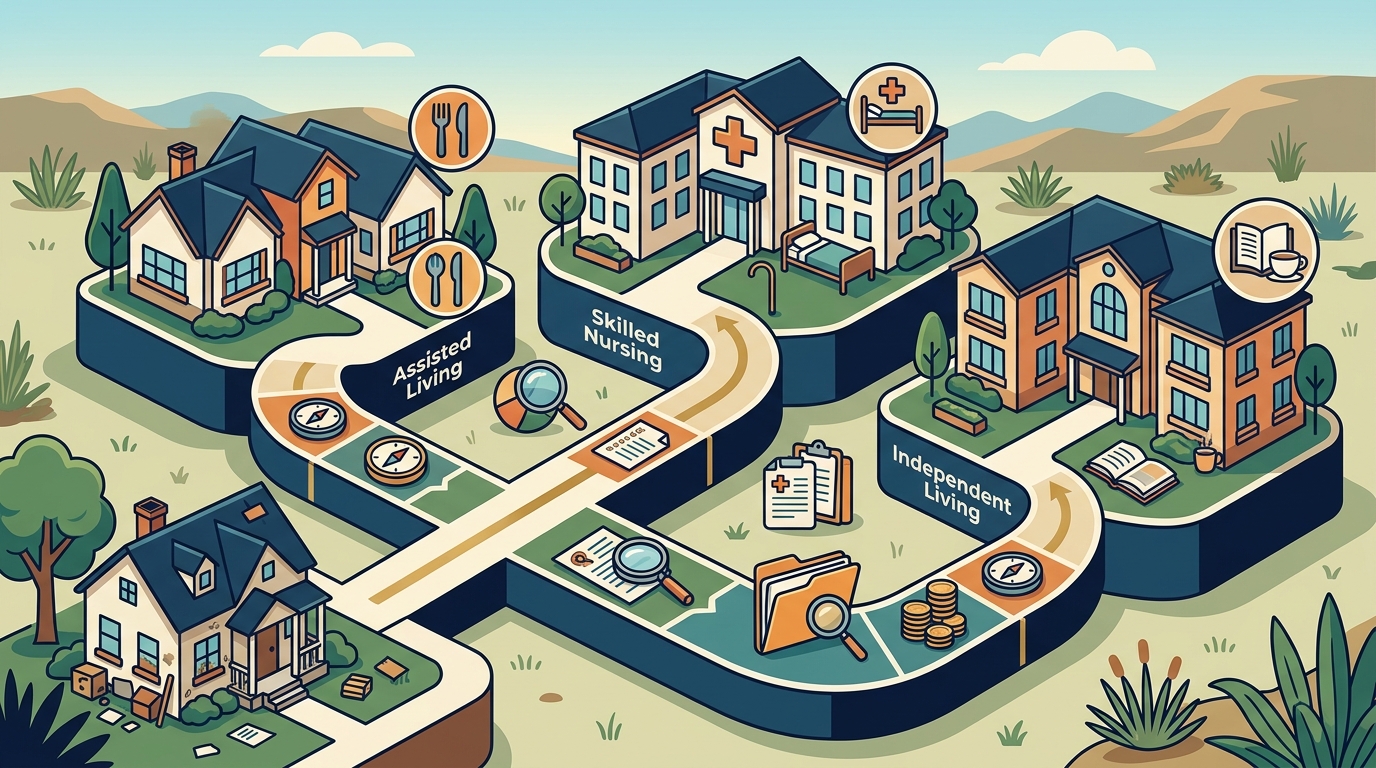
Understanding the distinctions between these options is vital for making an informed decision. The table below summarizes the key differences in care intensity, staff availability, and typical use cases.
| Option | Care Level | Staff Availability | Best For |
|---|---|---|---|
| Independent Living | Low | On-call / Daytime | Active seniors needing maintenance help |
| Assisted Living | Medium | 24/7 Personal Care | ADL assistance and medication management |
| Memory Care | Specialized | 24/7 Dementia Trained | Alzheimer's and cognitive decline |
| Skilled Nursing | High | 24/7 Medical Staff | Complex medical needs and rehab |
Each level serves a distinct purpose. Independent living preserves autonomy, assisted living supports daily function, memory care addresses cognitive safety, and skilled nursing manages medical complexity. The right choice depends entirely on your parent's current health status and projected trajectory.
Key Takeaways
- 70% of seniors need long-term care: This transition is a common part of aging, not a rare crisis.
- Independent living is not medical care: It is for those who can self-care but want to avoid home maintenance.
- Assisted living covers ADLs: It provides help with bathing, dressing, and medication for those who can no longer live alone safely.
- Memory care is secure: It is designed specifically for dementia patients to prevent wandering and reduce agitation.
- Skilled nursing is medical: It requires licensed nurses and is for complex health conditions or rehabilitation.
- Local expertise matters: South Denver communities vary significantly in their specific amenities and care protocols.
- Harbor Senior Placement is free: Families pay nothing; communities compensate the advisor for their guidance.
Frequently Asked Questions
How do I know if my parent needs assisted living?
If your parent is struggling with activities of daily living (ADLs) such as bathing, dressing, or managing medications, or if there are safety concerns like forgetting to turn off appliances, assisted living is likely necessary.
What is the difference between memory care and assisted living?
Assisted living provides general personal care and support. Memory care is a specialized, secure subset of assisted living designed specifically for residents with Alzheimer's or dementia, featuring enhanced safety protocols and dementia-trained staff.
Is Harbor Senior Placement free for families?
Yes. Harbor Senior Placement is always free for families. The senior living communities in South Denver pay for the advisory services, ensuring there is no cost or obligation to you.
What areas do you serve in the Denver metro?
We focus exclusively on South and Southwest Denver, including Littleton, Highlands Ranch, Centennial, Lone Tree, Parker, Castle Rock, Lakewood, and Englewood.
Can I tour communities before making a decision?
Absolutely. We encourage families to tour multiple options. Our advisor can join you to help you ask the right questions and evaluate the safety and culture of each facility.
How fast can we move if it is an emergency?
We can streamline the process for urgent situations. By pre-vetting communities and understanding your specific needs, we can accelerate the move-in timeline when time is critical.
What if my parent is not ready to move?
It is common for seniors to resist change. We can help you approach the conversation with empathy and provide data on safety risks to help them understand the necessity of the transition.
Next Steps
When a parent can no longer live safely alone, the window for making a calm, informed decision is often narrow. Do not wait for a crisis to start researching. Our local advisor in South Denver is ready to help you navigate these options with clarity and compassion. We provide a free, no-pressure consultation to discuss your family's specific needs and tour the most suitable communities.
Take the first step toward peace of mind today. Contact Harbor Senior Placement to schedule your free consultation and begin guiding your loved one to their safe harbor.