

Choosing the right living environment for an aging loved one is one of the most significant decisions a family will face. The confusion often stems from overlapping terminology and the rapid evolution of care needs. According to the U.S. Census Bureau, the population aged 65 and older is projected to reach nearly 80 million by 2040, driving an unprecedented demand for specialized senior housing options. This demographic shift means that families in South Denver are increasingly navigating a complex landscape of care levels, from independent living to skilled nursing. Understanding the fundamental differences between assisted living and memory care is the first step toward making a confident, stress-free decision. (About Curtis Harbor Senior)
Defining Assisted Living
Assisted living is designed for seniors who require help with daily activities but do not need constant medical supervision. It is a residential setting that offers a balance of independence and support. Residents typically have their own private apartments or rooms while having access to communal dining, housekeeping, and transportation services. The primary goal is to maintain autonomy while ensuring safety and social engagement. (Blog Harbor Senior Placement)
Assisted living is a housing model that provides personal care services, such as bathing, dressing, and medication management, to individuals who can no longer live completely independently. This level of care is ideal for those who are socially active but need a safety net for daily tasks. In South Denver, communities offering assisted living often focus on creating a vibrant social environment to combat isolation, which is a critical factor in overall health.
For families in Littleton, Highlands Ranch, and Centennial, assisted living serves as a transitional step. It allows seniors to stay connected to their community while receiving the necessary support. The staff-to-resident ratio is generally lower than in memory care, reflecting the lower intensity of medical needs. However, the presence of trained caregivers ensures that help is available 24/7 if a resident falls or experiences a health issue.
Understanding Memory Care
Memory care is a specialized form of assisted living designed specifically for individuals with Alzheimer's disease, dementia, or other cognitive impairments. The environment is structured to provide maximum safety and security, often featuring secured exits to prevent wandering, which is a common and dangerous behavior associated with cognitive decline.
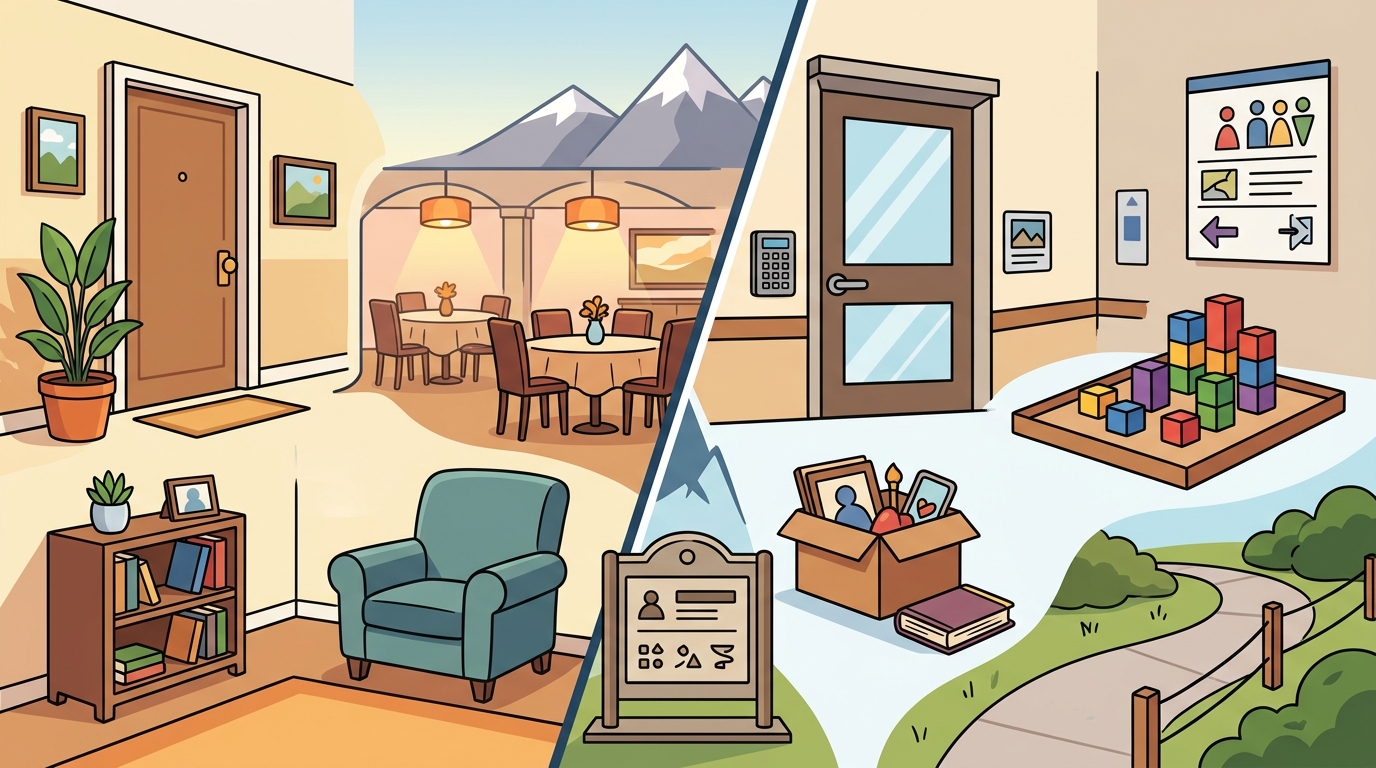
Memory care is a specialized senior living option that provides intensive support and secure environments for individuals experiencing cognitive decline, such as dementia or Alzheimer's disease. Unlike standard assisted living, memory care facilities are designed with circular hallways and visual cues to help residents navigate safely. The staff undergoes extensive training in dementia care techniques, including validation therapy and non-verbal communication strategies.
The intensity of care in memory care is significantly higher. Staff members are trained to manage behavioral changes, such as agitation or confusion, with patience and specialized protocols. For families in Parker, Lone Tree, and Castle Rock, this level of care provides peace of mind knowing that their loved one is in a secure environment where their specific cognitive needs are prioritized. The focus shifts from general independence to maintaining quality of life through structured routines and sensory engagement.
Key Differences in Care and Safety
While both assisted living and memory care provide support, the core differences lie in the intensity of care, the physical environment, and the staff expertise. Understanding these distinctions is crucial for matching the right level of care to your loved one's current and future needs.
Security and Safety Features
Security is the most immediate differentiator. Memory care facilities are built with locked doors, keypad entries, and enclosed courtyards to prevent wandering. Assisted living communities are generally open, allowing residents to come and go as they please, which supports their independence but requires them to be more aware of their surroundings.
Staff Training and Expertise
Staff in memory care facilities receive specialized training in dementia care, including how to handle sundowning, aggression, and communication breakdowns. Assisted living staff are trained in general elder care, focusing on physical assistance and medication management. The ratio of staff to residents is typically higher in memory care to ensure constant monitoring and support.
Activities and Engagement
Activities in assisted living are often social and recreational, such as group outings, fitness classes, and game nights. Memory care activities are therapeutic and tailored to cognitive abilities, focusing on sensory stimulation, music therapy, and simple tasks that provide a sense of accomplishment. The goal in memory care is to reduce anxiety and promote comfort rather than social performance.
Cost Comparison and Financial Planning
Cost is a significant factor in senior living decisions. Memory care is generally more expensive than assisted living due to the higher level of care, specialized staff training, and secure infrastructure. However, the cost varies widely based on location, amenities, and the specific level of care required.
| Feature | Assisted Living | Memory Care |
|---|---|---|
| Primary Focus | Personal care and social engagement | Cognitive support and safety |
| Security | Open access, emergency response | Secured exits, wandering prevention |
| Staff Training | General elder care | Dementia and Alzheimer's specialized |
| Cost Level | Lower to Moderate | Moderate to High |
| Best For | Seniors needing daily task help | Seniors with cognitive decline |
Financial planning for senior care often involves long-term care insurance, veterans benefits, or private pay. It is essential to understand what is included in the base price and what services are charged separately. For example, medication management or specialized therapies may incur additional fees. Consulting with a local advisor can help clarify these costs and identify potential financial assistance programs available in Colorado.
Making the Right Choice for Your Family
Choosing between assisted living and memory care is not always a binary decision. Many seniors start in assisted living and transition to memory care as their needs change. This progression is common and should be anticipated in long-term planning. The key is to choose a community that offers a continuum of care, allowing for seamless transitions without the stress of relocating to a new facility.
For families in South Denver, the proximity to family and familiar surroundings is often a priority. Local communities in Lakewood, Englewood, and Arapahoe County offer the benefit of keeping seniors close to their support networks. This connection can significantly impact the emotional well-being of the resident, reducing feelings of isolation and abandonment.
It is also important to consider the emotional readiness of both the senior and the family. Moving to a care facility is a major life change. Open communication, involving the senior in the decision-making process as much as possible, can help ease the transition. A trusted local advisor can facilitate these conversations, providing objective insights and helping to navigate the emotional complexities of the process.
Key Takeaways
- Assisted Living provides personal care and social support for seniors who need help with daily tasks but remain cognitively intact.
- Memory Care offers specialized, secure environments for individuals with dementia or Alzheimer's, focusing on safety and cognitive engagement.
- Security is a primary differentiator, with memory care featuring locked exits and wandering prevention technologies.
- Cost for memory care is typically higher due to the intensive staff training and specialized infrastructure required.
- Continuum of Care is essential, allowing seniors to transition between levels of care as their needs evolve.
- Local Expertise in South Denver helps families navigate the specific nuances of community options in Littleton, Highlands Ranch, and Centennial.
- Emotional Support is critical, with professional guidance helping families manage the stress and decision-making involved in senior placement.
Frequently Asked Questions
What is the main difference between assisted living and memory care?
Assisted living focuses on helping with daily activities like bathing and dressing for seniors who are cognitively intact. Memory care provides specialized, secure support for individuals with dementia or Alzheimer's, addressing cognitive decline and safety risks like wandering.
Can a resident move from assisted living to memory care?
Yes, many communities offer a continuum of care. If a resident's cognitive needs increase, they can often transition to the memory care wing or a partnered facility without having to relocate to a completely new neighborhood.
How much does memory care cost in South Denver?
Memory care costs vary based on the level of care needed and the specific community. Generally, it is more expensive than assisted living due to the higher staff-to-resident ratio and specialized security features. It is best to consult with a local advisor for current pricing.
Is memory care covered by Medicare?
Medicare typically does not cover long-term memory care. It may cover short-term skilled nursing or medical services, but ongoing memory care is usually paid through private pay, long-term care insurance, or veterans benefits.
What should I look for in a memory care facility?
Look for secured environments, trained dementia care staff, engaging therapeutic activities, and a clean, safe physical space. Visiting the facility and observing interactions between staff and residents is crucial.
How can I help my loved one adjust to memory care?
Bring familiar items from home, maintain a consistent routine, and visit frequently during the initial adjustment period. Patience and open communication with the care team are key to a smooth transition.
Does Harbor Senior Placement charge families for their services?
No, Harbor Senior Placement is always free for families. The senior living communities pay for our services, so there is no cost or obligation to work with us.
Start Your Journey
Navigating the choice between assisted living and memory care is complex, but you do not have to do it alone. Harbor Senior Placement provides free, local guidance to South Denver families. We help you understand your options, tour communities, and make decisions that fit your loved one's needs and your budget. Contact us today to start a conversation about your family's future.
Contact Harbor Senior Placement to schedule a free consultation with a local advisor who understands the unique landscape of senior living in Littleton, Highlands Ranch, and beyond.