

Independent living is often the wrong choice when a parent requires daily assistance with bathing, dressing, or medication management. While these communities offer social engagement and maintenance-free housing, they typically do not provide the hands-on personal care needed for seniors with significant physical or cognitive declines. If your parent is struggling to stay safe at home, you must evaluate whether their needs exceed the scope of standard independent living services before committing to a move.
Understanding the Scope of Independent Living
Independent living is a housing model designed for active seniors who are mostly self-sufficient. It is not a care facility. These communities focus on convenience, social connection, and safety, but they generally do not include daily personal care services. In South Denver, many independent living communities offer meals, housekeeping, and transportation, but they do not provide nursing care or assistance with activities of daily living (ADLs).
The critical distinction lies in the level of support. If your parent needs help getting in and out of the shower, managing complex medication regimens, or has experienced recent falls, independent living may not be sufficient. Assisted living is a residential care setting that provides daily support for activities like bathing, dressing, and meals. This is the primary alternative when independent living falls short. Understanding this boundary is the first step in making a safe decision for your loved one.
Signs Your Parent Needs More Than Independent Living
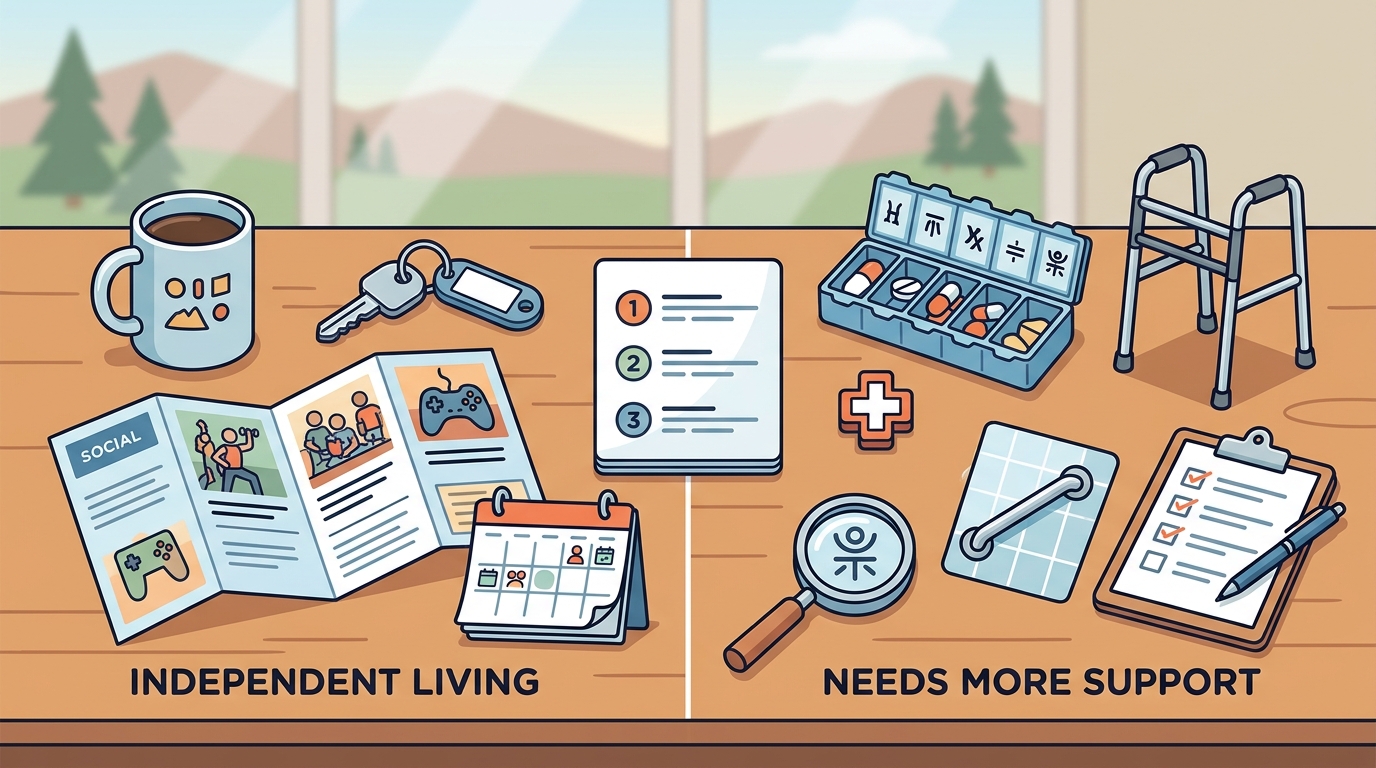
Families often hesitate to move past independent living because they fear it is a step toward a nursing home. However, recognizing the signs of declining independence is crucial for safety. A parent may need more support than independent living offers if they exhibit specific behavioral or physical changes. These are not just inconveniences; they are safety risks.
- Medication Management: Forgetting doses, taking them at wrong times, or mixing up prescriptions.
- Hygiene and Grooming: Neglecting personal hygiene or wearing the same clothes for multiple days.
- Home Safety: Leaving the stove on, turning off heat in winter, or failing to answer the phone.
- Cognitive Changes: Confusion about dates, getting lost in familiar neighborhoods, or difficulty making simple decisions.
If you observe these patterns, independent living will not solve the problem. The environment may be nicer, but the lack of daily oversight means the risks remain. In Littleton and Highlands Ranch, families often realize too late that a community with a nice dining room does not equal a care team monitoring their parent's health.
The Gap Between Housing and Care
Many seniors and their families conflate housing quality with care quality. A beautiful apartment in a South Denver community does not automatically mean your parent is safe. Independent living communities are designed for people who can live alone but want to avoid the burden of home maintenance. They are not designed for people who cannot live alone.
When a parent needs more support, the gap between what they need and what independent living provides becomes dangerous. For example, if a parent has early-stage dementia, independent living may seem like a good fit because they are still mobile. However, without secured exits and staff trained in dementia care, wandering or confusion can lead to serious incidents. Memory care is a specialized form of assisted living designed for individuals with Alzheimer's or other dementias. It provides a secure environment and staff trained to handle behavioral changes. If cognitive decline is a factor, independent living is rarely the right answer.
Local Considerations in South Denver
Choosing the right level of care is also a local decision. In the South Denver area, including Littleton, Centennial, and Lone Tree, the landscape of senior living varies significantly. Some communities offer tiered care, allowing residents to start in independent living and transition to assisted living within the same campus. Others are strictly independent or strictly assisted. Knowing the difference is vital.
Harbor Senior Placement works exclusively with families in South and Southwest Denver. We understand the specific communities in this region and know which ones offer the right level of support for your parent's needs. We do not just send you a list of addresses. We help you understand the actual care capabilities of each community. This local expertise ensures that you are not just looking at amenities, but at the real support systems in place.
How to Make the Right Decision
Deciding if independent living is right for your parent requires an honest assessment of their current needs. Start by listing the tasks they struggle with. If the list includes ADLs like bathing, dressing, or eating, independent living is likely not enough. If the list includes cognitive concerns or safety risks, you need a higher level of care.
Do not rely on guesswork. A professional assessment can clarify the level of care required. Harbor Senior Placement provides free guidance to families navigating these decisions. We help you evaluate options, tour communities, and ask the right questions. Our service is free for families because we are compensated by the communities, not by you. This means we can be objective and focused on your parent's best interests.
Key Takeaways
- Independent living is for active seniors who are self-sufficient, not for those needing daily personal care.
- If your parent needs help with bathing, dressing, or medication, consider assisted living instead.
- Cognitive decline or dementia requires memory care, not independent living.
- Local knowledge is critical; not all communities in South Denver offer the same level of support.
- Harbor Senior Placement offers free, local guidance to help you make the right decision.
- Do not let the fear of a nursing home prevent you from choosing the right level of care.
Frequently Asked Questions
Can independent living communities provide personal care?
Generally, no. Independent living communities do not provide daily personal care services like bathing or dressing. Some may offer third-party caregivers for an additional cost, but this is not standard. If your parent needs regular assistance with ADLs, assisted living is the appropriate choice.
What is the difference between independent living and assisted living?
Independent living is housing for active seniors who are self-sufficient. Assisted living is residential care that provides daily support for activities like bathing, dressing, and meals. The key difference is the level of hands-on care provided.
Is independent living a good option for someone with early dementia?
Usually, no. Early dementia often involves confusion and safety risks that independent living cannot manage. Memory care is designed for individuals with dementia and provides a secure environment with trained staff. Independent living may not be safe for someone with cognitive decline.
How can I tell if my parent needs more support than independent living?
Look for signs of declining independence, such as difficulty managing medications, neglecting hygiene, or experiencing falls. If your parent is struggling with daily tasks, they likely need assisted living or a higher level of care. A professional assessment can help clarify their needs.
Is Harbor Senior Placement free for families?
Yes, Harbor Senior Placement is completely free for families. We are compensated by the senior living communities, not by you. This allows us to provide unbiased, local guidance without any cost to your family.
Next Steps for Your Family
If you are unsure whether independent living is the right choice for your parent, you do not have to figure it out alone. Harbor Senior Placement is here to help. We provide free, compassionate guidance to families in South Denver and surrounding areas. We will help you assess your parent's needs, explore local options, and make a decision with confidence. To start the conversation, today.