
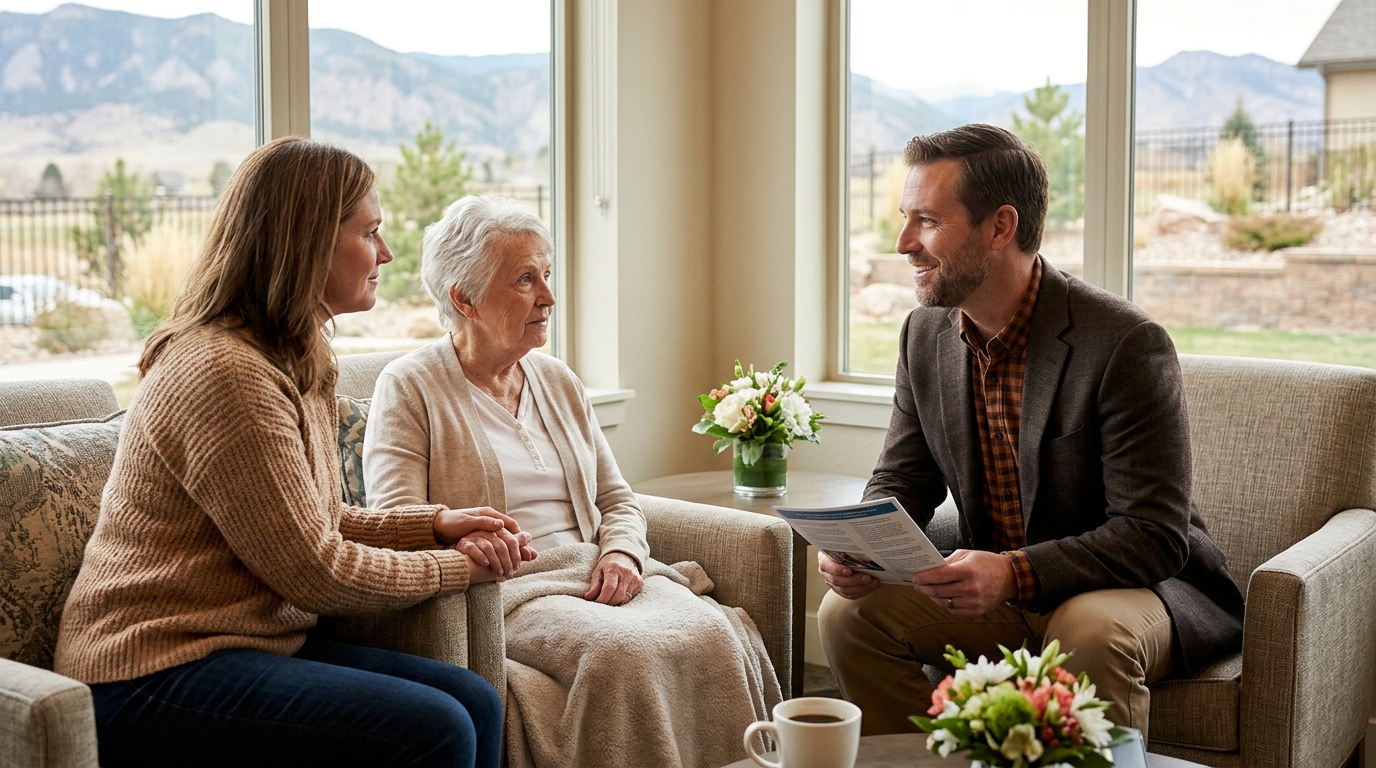
Best Senior Living Options After Hospital or Rehab Discharge in Denver
Choosing the right senior living option after a hospital or rehab discharge in Denver requires matching your loved one's specific medical needs with the appropriate level of care. Harbor Senior Placement provides free, local guidance to help South Denver families navigate this critical transition with clarity and compassion. This guide covers skilled nursing, assisted living, memory care, home health, post-acute rehab, and Medicare coverage to ensure you make an informed decision.
Skilled Nursing Facilities
Skilled nursing facilities (SNFs) are healthcare facilities that provide 24-hour nursing care for individuals who require medical supervision but do not need hospital-level intensity. These facilities are ideal for patients recovering from major surgeries, strokes, or severe infections who need daily monitoring by licensed nurses and therapists. The environment is clinical, with a focus on medical stability and recovery milestones.
When to Choose Skilled Nursing
Assisted Living Options
Assisted living is a residential community that provides housing and support with daily activities such as bathing, dressing, and medication management. It is designed for seniors who are no longer safe living alone but do not require the intensive medical care of a nursing home. These communities offer a balance of independence and support, with private apartments and social activities.
Transitioning from Hospital to Assisted Living
Many families move directly from a hospital to assisted living if the patient is medically stable but needs help with daily tasks. It is crucial to assess whether the patient can safely navigate the community. Harbor Senior Placement helps families evaluate if a patient is ready for this transition or if they need a step-down in care first. We ensure the community's staff can handle the specific needs of the individual.

Memory Care
Memory care is a specialized form of assisted living designed for individuals with Alzheimer's disease, dementia, or other cognitive impairments. These communities feature secure environments, staff trained in dementia care, and activities that promote cognitive engagement. The goal is to provide safety and dignity while managing the behavioral and cognitive challenges of the disease.
Identifying the Need for Memory Care
If your loved one has been diagnosed with dementia or is exhibiting signs of confusion, wandering, or memory loss, memory care is often the safest option. Standard assisted living may not have the security or staff training to handle these symptoms effectively. Harbor Senior Placement specializes in matching families with memory care communities in South Denver that have a proven track record of compassionate dementia care.
Home Health Care
Home health care is a service where licensed nurses, therapists, or aides visit the patient's home to provide medical care or assistance with daily activities. This option allows seniors to remain in their familiar environment while receiving necessary support. It is often covered by Medicare if the patient is homebound and requires intermittent skilled care.
Assessing Home Viability
Before choosing home health, families must evaluate if the home environment is safe. This includes checking for fall hazards, ensuring adequate support from family members, and verifying that the patient can manage basic needs between visits. If the home is not safe or the family cannot provide the required level of supervision, a residential community may be a better fit.
Post-Acute Rehabilitation
Post-acute rehabilitation is a short-term program focused on restoring physical function after a hospital stay. These programs are intensive and goal-oriented, with patients working with physical, occupational, and speech therapists for several hours a day. The goal is to return the patient to their highest level of independence as quickly as possible.
Rehab vs. Long-Term Care
It is important to distinguish between short-term rehab and long-term care. Rehab is temporary and focused on recovery, while long-term care is for ongoing support. Families should set clear goals with the rehab team to ensure the patient is making progress. If the patient is not meeting milestones, the care plan may need to be adjusted or the level of care changed.
Denver Area Facilities
The Denver metro area offers a wide range of senior living options, from independent living to skilled nursing. However, the quality and availability of care can vary significantly by neighborhood. South Denver, including areas like Littleton, Highlands Ranch, and Centennial, has a growing number of high-quality communities that cater to the specific needs of the local population.
Local Knowledge Matters
Choosing a facility in a large city can be overwhelming. Harbor Senior Placement provides local expertise, having toured and vetted communities in South and Southwest Denver. We know which facilities have the best staff, the most up-to-date amenities, and the most transparent pricing. This local insight helps families avoid communities that may not be the right fit for their loved one.
Medicare Coverage
Medicare is a federal health insurance program for people aged 65 and older, and for some younger people with disabilities. It covers certain types of post-acute care, including skilled nursing and rehabilitation, but it does not cover long-term custodial care. Understanding the limits of Medicare coverage is essential for planning finances after a hospital discharge.
Understanding Coverage Limits
Medicare typically covers up to 100 days of skilled nursing or rehab care per benefit period, with the first 20 days fully covered and the remaining 80 days requiring a daily copayment. After this period, families must pay out-of-pocket or use other insurance. It is important to discuss these limits with the facility's billing office and to plan for any costs that may arise after the Medicare benefit is exhausted.
Key Takeaways
- Skilled nursing facilities are for patients who need 24-hour medical care.
- Assisted living is for seniors who need help with daily activities but are medically stable.
- Memory care is specialized for individuals with dementia or cognitive impairments.
- Home health care allows patients to recover at home with professional support.
- Post-acute rehab is a short-term, intensive program focused on recovery.
- Medicare covers short-term skilled care but not long-term custodial care.
- Local knowledge is crucial for finding the right facility in the Denver area.
- Harbor Senior Placement provides free, local guidance to help families make informed decisions.
Frequently Asked Questions
What is the difference between skilled nursing and assisted living?
Skilled nursing provides 24-hour medical care for patients with complex health needs, while assisted living provides support with daily activities for seniors who are medically stable.
Does Medicare cover assisted living?
No, Medicare does not cover long-term assisted living. It only covers short-term skilled nursing and rehabilitation care.
How do I know if my parent needs memory care?
If your parent has been diagnosed with dementia or is exhibiting signs of confusion, wandering, or memory loss, memory care is likely the safest option.
Is Harbor Senior Placement free for families?
Yes, Harbor Senior Placement is completely free for families. We are compensated by the communities we refer to, so you never pay for our guidance.
What areas of Denver does Harbor Senior Placement serve?
We serve South and Southwest Denver, including Littleton, Highlands Ranch, Centennial, Lone Tree, Parker, Castle Rock, Lakewood, and Englewood.
Can I visit a facility before making a decision?
Yes, we encourage families to tour facilities. Harbor Senior Placement can accompany you on tours to help you ask the right questions and assess the community.