

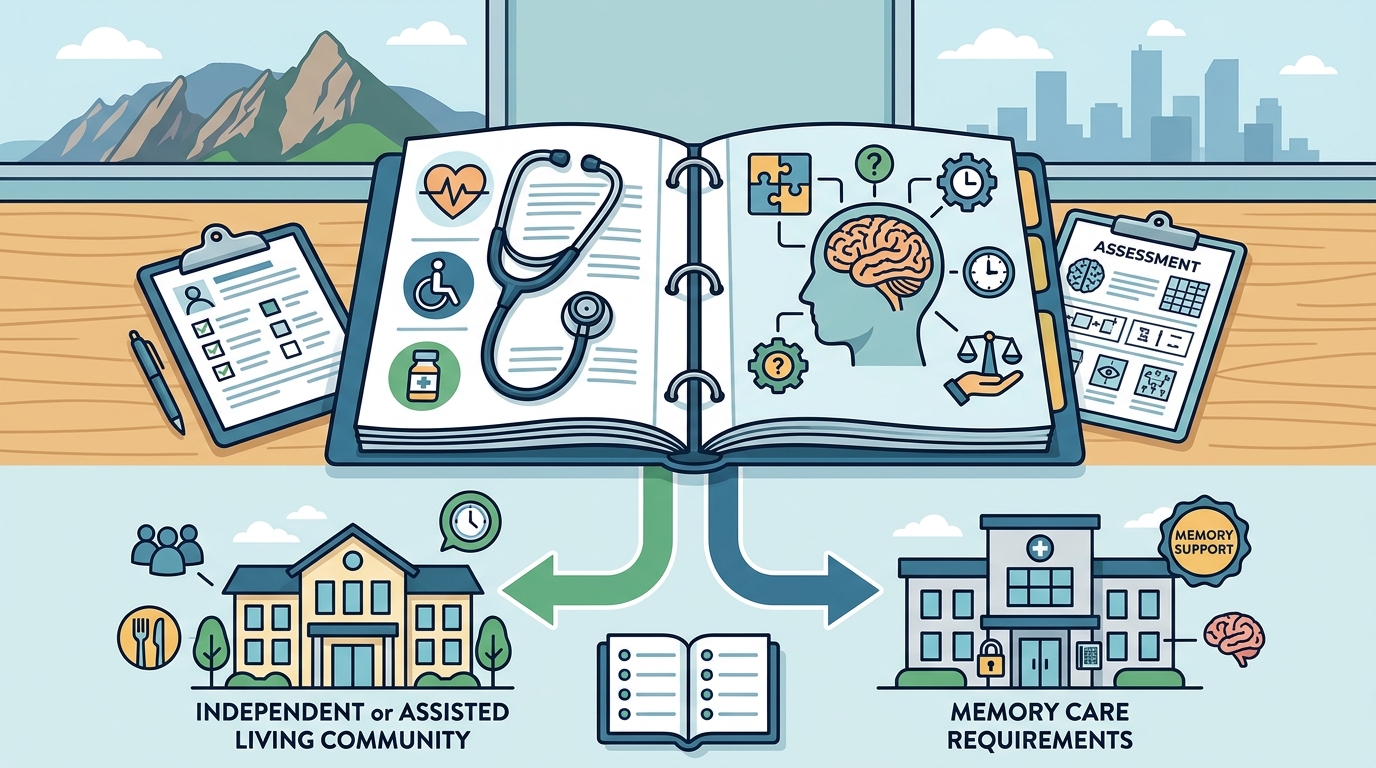
Medical assessment is the clinical process used to evaluate a senior's cognitive, physical, and behavioral status to determine the appropriate level of care. It distinguishes between general aging needs and specific dementia-related requirements. This evaluation ensures safety and compliance in Colorado senior living facilities.
The Clinical Distinction Between Care Levels
Assisted Living is a residential setting that provides help with daily activities like bathing and meals for seniors who are mostly independent. Memory Care is a specialized unit designed for residents with Alzheimer's, dementia, or other cognitive impairments who require secure environments and structured routines. The primary difference lies in the nature of the assistance required. Assisted Living focuses on physical support, while Memory Care focuses on cognitive safety and behavioral management.
In South Denver, communities are licensed to accept residents based on specific care levels. A resident who requires constant supervision due to wandering or confusion cannot safely live in a standard Assisted Living apartment. Conversely, a senior who is cognitively sharp but needs help with mobility does not require the restrictive environment of Memory Care. Misplacing a resident can lead to safety risks or unnecessary institutionalization. The medical assessment provides the objective data needed to make this distinction.
Why Doctors and Facilities Require Formal Evaluations
Colorado regulations mandate that senior living communities verify a resident's ability to care for themselves before admission. Facilities cannot accept residents who pose a safety risk to themselves or others without proper documentation. This documentation usually comes in the form of a physician's certification or a comprehensive geriatric assessment. These documents confirm that the resident's condition matches the facility's capabilities.
For families in Littleton and Highlands Ranch, this requirement can feel bureaucratic during an emotional time. However, it protects the family. If a community accepts a resident without a proper assessment and that resident wanders or becomes aggressive, the facility may be liable. Therefore, they are strict about these documents. A formal assessment ensures that the care plan is medically sound and legally compliant. It also helps the facility staff prepare the right environment for the resident's specific needs.
What the Assessment Actually Measures
A medical assessment for senior placement typically includes a cognitive screening, a physical health review, and a behavioral history. Cognitive screenings, such as the Mini-Mental State Examination, help identify the stage of dementia. Physical reviews assess mobility, fall risk, and the need for assistance with Activities of Daily Living. Behavioral history looks at past incidents like wandering, agitation, or medication non-compliance.
These three areas paint a complete picture of the resident's needs. A senior might have mild cognitive decline but excellent physical health. In this case, Assisted Living might be the right fit. Another senior might have moderate dementia but also severe mobility issues. This combination often points toward Memory Care with additional physical support. The assessment helps match the person to the place, not just the diagnosis to the label.
How Harbor Senior Placement Guides This Process
Navigating these medical requirements can be confusing for families. Harbor Senior Placement helps families in South Denver understand what documentation is needed before they tour communities. Curtis, the local advisor, works directly with families to gather the necessary medical records and physician certifications. This ensures that when families visit potential communities, they are not turned away due to missing paperwork.
Harbor Senior Placement is a free service for families. Communities pay for the placement, so families do not incur any cost for this guidance. Curtis personally tours the communities in the area and knows which ones are best equipped to handle specific medical profiles. This local expertise helps families avoid facilities that are not a good fit for their loved one's specific medical assessment results. The goal is to find a safe harbor where the resident receives the right level of care.
Key Takeaways
- Medical assessment is the clinical process used to determine the appropriate level of care for a senior.
- Assisted Living provides physical support, while Memory Care provides cognitive safety and structure.
- Colorado facilities require physician certifications to verify that a resident's condition matches their capabilities.
- The assessment measures cognitive status, physical health, and behavioral history to create a complete care profile.
- Harbor Senior Placement helps families gather the necessary medical documentation for free.
- Proper assessment prevents misplacement, which can lead to safety risks or unnecessary institutionalization.
Frequently Asked Questions
Who performs the medical assessment for senior living?
The assessment is typically performed by the senior's primary care physician or a geriatric specialist. They review the patient's history and perform cognitive and physical screenings to create a certification for the facility.
Can a family member perform the assessment?
No, a family member cannot provide the official medical certification. While family input is valuable, the facility requires a licensed medical professional to sign off on the resident's care level.
What if the assessment shows the senior needs more care than Assisted Living?
If the assessment indicates significant cognitive impairment or safety risks, the senior will likely need Memory Care or Skilled Nursing. The facility will not accept them into a standard Assisted Living unit.
How often does the medical assessment need to be updated?
Facilities typically require an updated assessment annually or whenever there is a significant change in the resident's condition. This ensures the care plan remains appropriate.
Does Harbor Senior Placement provide medical advice?
No, Harbor Senior Placement does not provide medical advice. We help families navigate the placement process and understand the documentation requirements for the communities we work with.