
Choosing the right senior living environment is one of the most complex decisions a family will face. According to the National Council on Aging, approximately 10% of Americans aged 65 and older live with Alzheimer's or other dementias, a number that is projected to rise significantly as the population ages. This statistic highlights why distinguishing between standard assisted living and specialized memory care is not just a preference, but a critical safety requirement for many families. The wrong choice can lead to increased anxiety for the senior and burnout for caregivers. This guide provides a structured, step-by-step framework to assess needs accurately, ensuring your loved one finds a safe harbor during this transition. (About Curtis Harbor Senior)
Step 1: Evaluate Cognitive Function and Safety Risks
The primary differentiator between assisted living and memory care is cognitive decline. Assisted living is designed for seniors who need help with daily tasks but retain their mental clarity. Memory care is specifically engineered for those with Alzheimer's, dementia, or other cognitive impairments that compromise safety.
Identifying Wandering Behaviors
Wandering is a common symptom of dementia that requires immediate environmental intervention. If your loved one attempts to leave the home unsupervised or gets lost in familiar places, standard assisted living may not be sufficient. Memory care facilities utilize secure perimeters and locked exits to prevent wandering while maintaining a homelike atmosphere. Alzheimer's Association data indicates that wandering can lead to serious injury or death if not managed in a secure environment.
Assessing Disorientation and Confusion
Seniors in memory care often experience disorientation regarding time, place, and person. Look for signs such as asking the same questions repeatedly, forgetting recent conversations, or struggling to recognize family members. If these behaviors are present, a memory care setting provides the structured routine and cognitive support necessary to reduce anxiety and confusion.
Step 2: Assess Physical Mobility and Daily Living Needs
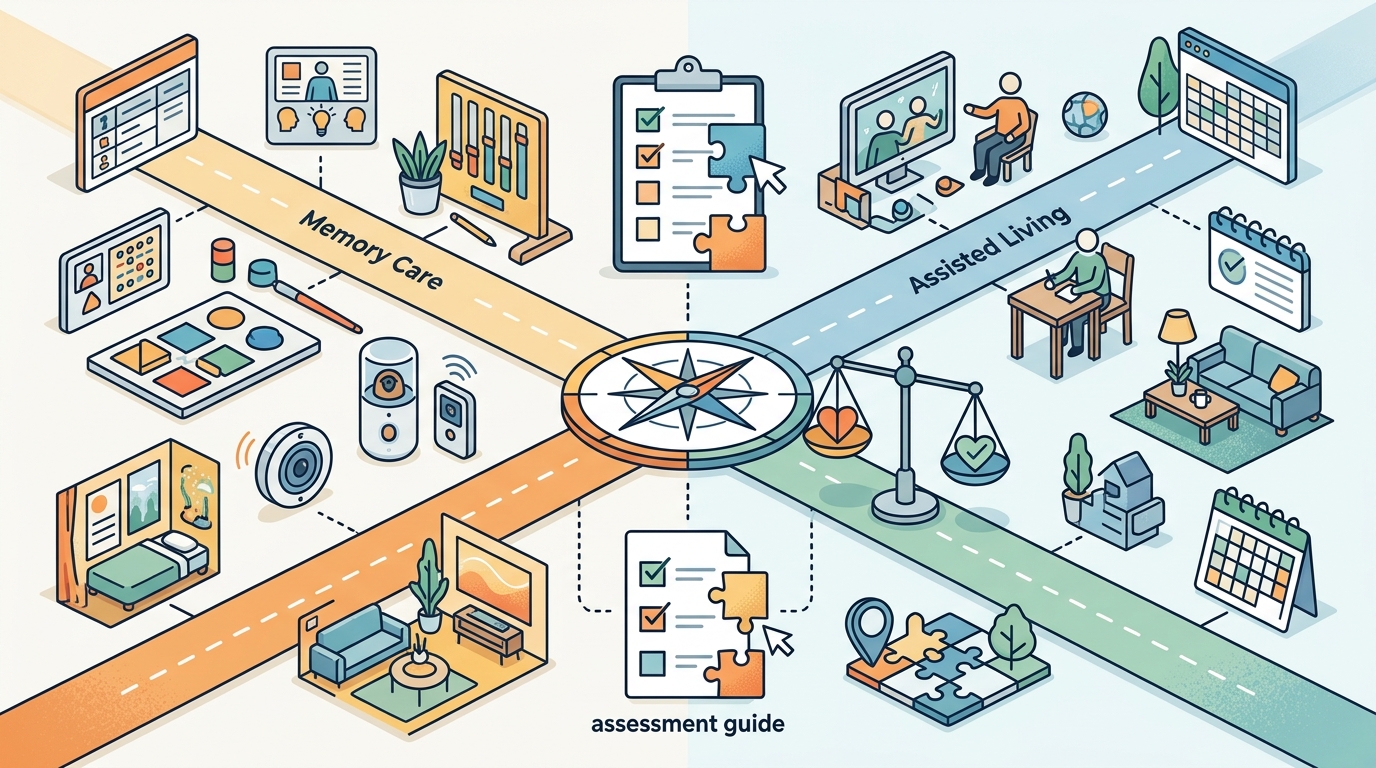
While cognitive health is the primary driver for memory care, physical needs determine the level of assistance required in both settings. Understanding the specific activities of daily living (ADLs) your loved one struggles with will help narrow down the appropriate care level.
Activities of Daily Living (ADLs)
ADLs include bathing, dressing, grooming, toileting, transferring, and eating. In assisted living, staff assist with these tasks on an as-needed basis. In memory care, assistance is often more intensive and continuous due to the combination of physical and cognitive challenges. National Council on Aging reports show that seniors with dementia often require more hours of care per day than those without cognitive impairment.
Medication Management
Memory care residents often have complex medication regimens due to co-occurring health conditions. Staff in memory care units are trained to manage medications that may affect mood or behavior, ensuring doses are taken correctly and monitoring for side effects. Assisted living facilities also provide medication management, but the protocols may be less specialized for behavioral health interactions.
Step 3: Compare Care Models and Staffing Ratios
The operational model of the facility dictates the quality of care your loved one will receive. Memory care requires a higher staff-to-resident ratio and specialized training to handle behavioral challenges effectively.
Specialized Training Requirements
Staff in memory care units undergo extensive training in dementia care techniques, such as validation therapy and redirection strategies. This training helps staff respond to agitation or aggression with empathy rather than correction. National Association for Home Care & Hospice guidelines emphasize that specialized training is crucial for maintaining resident dignity and safety in dementia care settings.
Staff-to-Resident Ratios
Memory care facilities typically maintain lower staff-to-resident ratios compared to assisted living. This ensures that each resident receives personalized attention and monitoring. In assisted living, staff may manage a larger caseload, which is appropriate for residents who are more independent but still require periodic assistance.
Step 4: Analyze Environmental Design and Security
The physical environment plays a pivotal role in the well-being of seniors with cognitive impairments. Memory care facilities are designed with specific architectural features to support safety and orientation.
Secure Environments
Memory care units often feature secure courtyards, locked doors, and alarm systems that alert staff if a resident attempts to leave. These features prevent wandering while allowing residents to move freely within a safe boundary. Assisted living facilities are generally open and accessible, which is suitable for residents who do not pose a wandering risk.
Sensory-Friendly Design
Memory care environments often use color-coded hallways, clear signage, and calming lighting to help residents navigate and reduce sensory overload. These design elements support cognitive function and reduce anxiety. AARP research highlights that environmental modifications can significantly improve the quality of life for seniors with dementia.
Step 5: Review Financial Structures and Contract Terms
Understanding the financial implications of each care type is essential for long-term planning. Memory care is typically more expensive than assisted living due to the higher level of care and staffing requirements.
Cost Comparison
Memory care costs vary by location and facility amenities, but they are generally higher than assisted living. Families should inquire about what is included in the base price, such as meals, activities, and personal care services. Senior Living Options data suggests that families should budget for potential increases in care levels as cognitive decline progresses.
Insurance and Payment Options
Long-term care insurance, veterans benefits, and Medicaid may cover some or all of the costs for memory care, depending on eligibility. Assisted living is often paid out-of-pocket or through long-term care insurance. It is crucial to review policy details and consult with a financial advisor to understand coverage limits and exclusions.
Key Takeaways
- Cognitive Assessment is Critical: Wandering, disorientation, and confusion are primary indicators for memory care rather than standard assisted living.
- Staffing Ratios Matter: Memory care requires lower staff-to-resident ratios and specialized dementia training to ensure safety and quality of life.
- Environmental Security: Secure perimeters and sensory-friendly design are essential features of memory care to prevent wandering and reduce anxiety.
- Cost Differences: Memory care is typically more expensive than assisted living due to the intensity of care and staffing requirements.
- Local Expertise Helps: Working with a local advisor who tours communities firsthand can clarify the real differences between facilities in South Denver.
- Proactive Planning: Assessing needs early allows for a smoother transition and prevents crisis-driven decisions.
- Harbor Senior Placement is Free: Our guidance is always free for families. The senior living communities pay for our services, so there is no cost or obligation.
Frequently Asked Questions
How do I know if my loved one needs memory care instead of assisted living?
If your loved one exhibits signs of cognitive decline such as wandering, getting lost, forgetting recent events, or experiencing significant confusion, memory care is likely necessary. Assisted living is suitable for those who need help with daily tasks but remain mentally oriented.
What is the main difference in staffing between assisted living and memory care?
Memory care staff receive specialized training in dementia care and maintain lower staff-to-resident ratios. This ensures they can handle behavioral challenges and provide constant monitoring for safety.
Is memory care more expensive than assisted living?
Yes, memory care is generally more expensive due to the higher level of care, specialized staffing, and secure environmental features required.
Can a resident move from assisted living to memory care?
Yes, many facilities offer a continuum of care. If a resident's cognitive needs increase, they may transition to a memory care unit within the same community or move to a specialized facility.
Does Harbor Senior Placement charge families for their services?
No, Harbor Senior Placement is always free for families. The senior living communities pay for our services, so there is no cost or obligation to work with us.
What areas does Harbor Senior Placement cover?
We focus only on South & Southwest Denver, including Littleton, Highlands Ranch, Centennial, Lone Tree, Parker, Castle Rock, Lakewood, and Englewood.
How can I tour communities with Harbor's help?
You can start with a conversation by calling or texting (303) 718-3011. We will help you narrow down options, schedule tours, and provide guidance throughout the process.
Next Steps
Navigating the choice between assisted living and memory care requires clarity, compassion, and local insight. At Harbor Senior Placement, we help South Denver families make these decisions with confidence. Our process is simple: we talk about what is going on, narrow the options, tour together, and stay with you after move-in. Contact Harbor Senior Placement today to start your free, no-obligation consultation. Let us help your loved one find their safe harbor.