

When a parent can no longer live safely at home, the first question most Denver families ask is: "What kind of care does my loved one actually need?" Independent living, assisted living, and memory care each serve a different purpose, and choosing the wrong level can mean paying for services you do not need or, worse, leaving a parent without enough support. This guide breaks down the differences, shows you how to decide, and explains how a local South Denver advisor at Harbor Senior Placement can walk you through every option at no cost to your family.
What Is Independent Living?
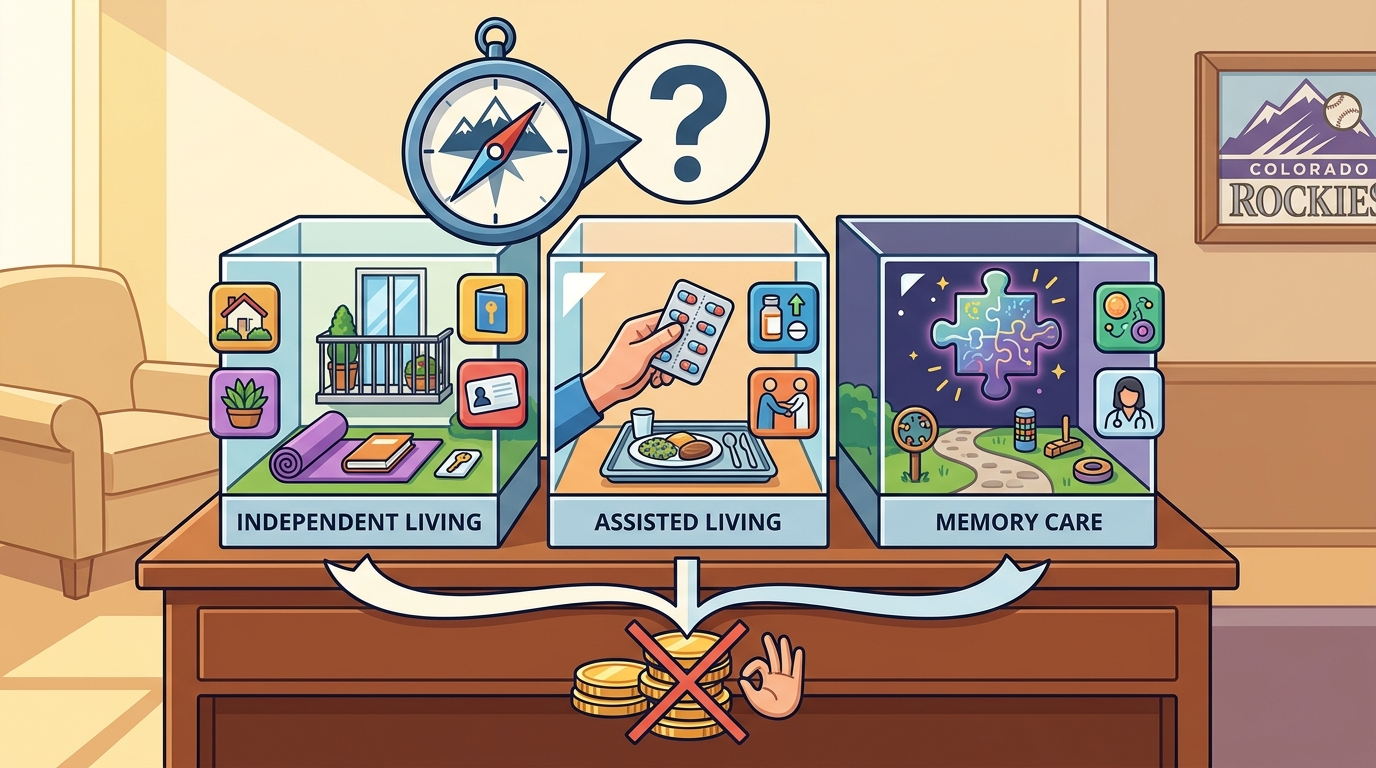
Independent living is a residential option designed for active older adults who want the convenience of community life without hands-on care services. Residents typically live in private apartments or cottages with access to chef-prepared meals, housekeeping, social events, and wellness programs.
Think of it as trading the burdens of homeownership, like yard work and maintenance, for a lifestyle focused on connection and leisure. No medical staff is on hand for daily care tasks, so this option works best when your loved one is self-sufficient but ready for a simpler routine. Learn more about this option in our independent living guide for Highlands Ranch.
What Is Assisted Living?
Assisted living is a senior living option for individuals who remain mostly independent but need help with daily tasks like bathing, dressing, medication management, or meal preparation. Communities provide 24/7 access to trained caregivers, personalized care plans, and social programming while preserving as much autonomy as possible.
Who Is It For?
Assisted living fits a parent who can still enjoy social activities and make everyday decisions but struggles with two or more activities of daily living (ADLs). According to the National Center for Assisted Living, nearly 60% of assisted living residents need help with three or more daily activities.
What Services Are Included?
Most communities bundle meals, housekeeping, transportation, medication reminders, and personal care assistance. Some Colorado communities also handle complex needs like oxygen management or catheter care. For cost context specific to our area, read our post on the cost of assisted living in South Denver.
What Is Memory Care?
Memory care is a specialized type of senior living designed for individuals with Alzheimer's disease or other forms of dementia. These communities provide 24/7 trained staff, structured routines, and a secure environment to prevent wandering and reduce confusion.
How It Differs from Assisted Living
While assisted living residents have the freedom to come and go, memory care residents live in a secured setting with keypad-entry doors and locked exits. Staff-to-resident ratios are higher, and daily activities are intentionally designed to support cognitive function and reduce agitation. If you are weighing these two options, our detailed breakdown of memory care vs. assisted living in Douglas County can help.
Warning Signs That Memory Care May Be Needed
Watch for wandering outside the home, forgetting to eat or bathe, increased confusion in familiar places, or aggressive behavior. These signs often indicate that a standard assisted living community cannot keep your loved one safe.
Side-by-Side Comparison Table
| Feature | Independent Living | Assisted Living | Memory Care |
|---|---|---|---|
| Best for | Active, self-sufficient seniors | Seniors needing help with ADLs | Seniors with dementia or Alzheimer's |
| Personal care assistance | None | Yes, customized care plan | Yes, intensive & 24/7 |
| Secured environment | No | Generally no | Yes, locked entries/exits |
| Staff-to-resident ratio | Minimal | Moderate | Higher |
| Cognitive programming | Social activities | Social & wellness activities | Specialized dementia therapies |
| Medication management | Self-managed | Supervised | Fully managed |
| Typical resident independence | High | Moderate | Low to moderate |
How to Decide Which Level of Care Fits
Start with an honest assessment of your loved one's daily abilities. Can they manage meals, medications, and personal hygiene without reminders? If yes, independent living may be appropriate. If they need regular help but can still make decisions and enjoy social time, assisted living is likely the right step.
When the Decision Is Urgent
Many families in Denver face this choice after a hospital discharge, a fall at home, or a new dementia diagnosis. In crisis moments, sorting through dozens of communities on your own adds stress to an already overwhelming situation. That is exactly when a local placement advisor can step in and narrow the options quickly.
Questions to Ask During a Tour
Ask about staff-to-resident ratios, how care plans are updated, what happens when needs increase, and whether the community can transition a resident from assisted living to memory care on-site. Our guide to your first senior living tour covers what to look for and what red flags to watch for.
Why Local Guidance Matters in South Denver
National directories and call-center services can hand you a list, but they cannot tell you what a community actually feels like on a Tuesday afternoon. Harbor Senior Placement is a local senior placement service serving South Denver and surrounding Colorado communities. Curtis personally meets with every family, visits the communities himself, and only works with a small number of families at a time.
The service is completely free for families because Harbor Placement is paid by the senior living communities, not by you. There is no contract, no pressure, and no call center. You get honest recommendations based on firsthand knowledge of the local options. To understand why this approach matters, read our post on why you should avoid free-list websites when searching for senior care.
Whether your parent needs independent living in Highlands Ranch, assisted living near Littleton, or memory care in Douglas County, Harbor Placement can guide you through tours, paperwork, and the emotional weight of the transition. Visit the How It Works page to see the step-by-step process.
Key Takeaways
- Independent living suits active seniors who want convenience without hands-on care.
- Assisted living provides daily support with meals, medications, and personal care while preserving independence.
- Memory care offers 24/7 supervision, secured environments, and specialized dementia programming.
- The right choice depends on your loved one's daily abilities, cognitive health, and safety needs.
- Crisis moments like a fall or hospital discharge often accelerate the decision; local guidance prevents rushed mistakes.
- Harbor Senior Placement offers free, in-person guidance across South Denver and surrounding Colorado communities.
- Curtis visits communities firsthand so families get recommendations based on real knowledge, not a database.
Frequently Asked Questions
What is the main difference between assisted living and memory care?
Assisted living helps seniors who need support with daily tasks like bathing and medication but who are still cognitively capable. Memory care is built for individuals with Alzheimer's or dementia and includes secured environments, higher staffing ratios, and structured cognitive activities.
How do I know if my parent needs memory care instead of assisted living?
Key warning signs include wandering, forgetting to eat or take medications, confusion in familiar places, and behavioral changes like aggression. A physician's assessment combined with input from a local placement advisor can help confirm the right level of care.
Is independent living the same as a retirement community?
They overlap significantly. Independent living is a type of retirement community focused on maintenance-free living, social programming, and convenience. The key distinction is that independent living does not include personal care or medical services.
Does Harbor Senior Placement charge families a fee?
No. The service is completely free for families. Harbor Placement is paid by the senior living communities, so you receive unbiased guidance at no cost.
What areas does Harbor Senior Placement serve?
Harbor Senior Placement serves South Denver and surrounding Colorado communities, including Highlands Ranch, Littleton, Douglas County, and nearby areas.
Can my parent move from assisted living to memory care within the same community?
Many Colorado communities offer both assisted living and memory care on one campus, allowing residents to transition without relocating to an entirely new building. Curtis can help you identify which local communities offer this continuity of care.
How quickly can Harbor Placement help if my parent was just discharged from the hospital?
Harbor Placement is built for urgent situations. Curtis works directly with families, often beginning the process the same day you reach out. There is no intake queue or call-center delay.
What should I look for when touring a senior living community in Denver?
Pay attention to staff friendliness, cleanliness, resident engagement, meal quality, and how management answers questions about care-plan updates. Our blog post on touring communities in the South Denver area covers red flags and green lights in detail.
Ready to Compare Your Options?
Skip the guesswork and get free, local guidance from someone who knows South Denver communities firsthand. Fill out the quick intake form and Curtis will personally reach out to start narrowing the right fit for your family.