

Comparing Assisted Living, Memory Care & Independent Living in Denver, Colorado
When a parent starts needing more help, one of the hardest parts is figuring out which type of senior living actually fits. Independent living, assisted living, and memory care sound similar, but they serve very different needs. For families in South Denver and surrounding Colorado communities, sorting through the options during an already stressful time can feel overwhelming. That is exactly why a local senior placement advisor matters. This guide breaks down the key differences between each care type and explains how Harbor Senior Placement helps families navigate the decision with free, hands-on guidance.
Understanding the Three Main Care Types
Independent Living
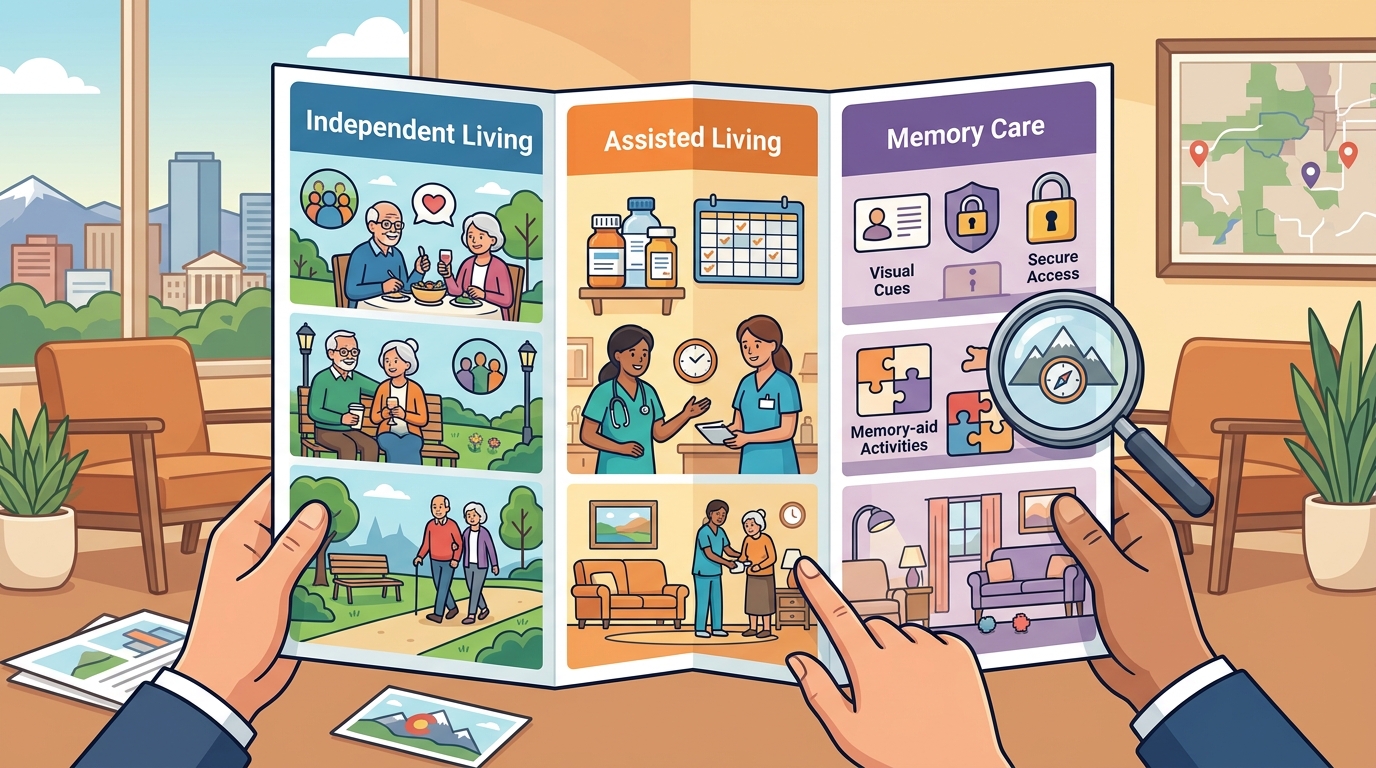
Independent living is a senior living option designed for active adults, typically age 60 and older, who can manage daily tasks on their own but want a maintenance-free lifestyle. These communities offer social activities, dining, housekeeping, and amenities without hands-on medical care. Think of it as downsizing into a community that handles the chores so your parent can focus on enjoying life.
Assisted Living
Assisted living is a residential care option for seniors who need help with activities of daily living (ADLs) such as bathing, dressing, medication management, and meal preparation, but do not require round-the-clock skilled nursing. According to the Federal Long Term Care Partners, assisted living communities typically include 24-hour caregiver access, transportation, and laundry services alongside an apartment-style living arrangement.
Memory Care
Memory care is a specialized form of senior living that provides individualized support for residents with Alzheimer's disease, dementia, or other cognitive impairments. These communities feature secured environments, structured daily routines, and staff trained specifically in dementia care. If you are noticing increasing confusion, wandering, or safety concerns at home, memory care may be the right step. You can learn more about how this works locally on our memory care placement page.
Side-by-Side Comparison Table
| Feature | Independent Living | Assisted Living | Memory Care |
|---|---|---|---|
| Best for | Active seniors wanting community & convenience | Seniors needing help with daily tasks | Seniors with Alzheimer's or dementia |
| Medical support | Minimal or none | Medication management, ADL assistance | 24/7 specialized cognitive care |
| Environment | Apartment-style, open campus | Apartment-style with care staff on site | Secured unit with structured programming |
| Social activities | Extensive | Extensive | Tailored to cognitive abilities |
| Typical need trigger | Downsizing, loneliness, retirement | Fall risk, difficulty with ADLs | Wandering, confusion, safety concerns |
| Staff availability | Business hours (front desk) | 24/7 caregivers | 24/7 dementia-trained caregivers |
This table gives you a starting point, but every family's situation has nuances. That is why Curtis at Harbor Senior Placement walks families through the differences based on their loved one's specific needs.
Signs Your Loved One Needs a Different Level of Care
Care transitions rarely happen on a predictable schedule. According to U.S. News & World Report, about 70% of adults who turn 65 will eventually need some form of long-term care. Knowing the warning signs helps families act before a crisis.
Watch for These Triggers
- Falls or mobility decline: Repeated falls or difficulty moving safely around the home often signal that independent living alone is no longer enough.
- Medication mismanagement: Missing doses or doubling up on prescriptions is a common reason families begin exploring assisted living.
- Cognitive changes: Getting lost in familiar places, forgetting recent conversations, or leaving the stove on may point toward memory care. Our blog post on memory care vs. assisted living in Douglas County explores this in more detail.
- Hospital or rehab discharge: A sudden hospitalization can make it clear that returning home is no longer safe. These moments require fast, informed decisions.
Why a Local Senior Placement Advisor Matters
Online directories can list hundreds of communities, but they cannot tell you which ones actually deliver quality care. A local advisor visits communities in person, knows the staff, and understands the differences between buildings that look identical on a website. Harbor Senior Placement serves South Denver and surrounding Colorado communities with this kind of firsthand knowledge.
Unlike national call centers that route your information to multiple sales teams, a local placement advisor works directly with your family. Curtis personally meets with each family and guides the placement himself. There is no spam, no database-driven matching, and no pressure. If you want to understand why this approach matters, read our post on why families should avoid free-list websites.
How Harbor Senior Placement Helps Denver Families
Harbor Senior Placement is a free senior placement and guidance service for families in South Denver and nearby Colorado communities. The service is free because Harbor is paid by the senior living communities, not by the families it serves. That means you get honest, unbiased recommendations without worrying about hidden costs.
Here is what working with Harbor looks like:
- Initial conversation: Curtis learns about your loved one's care needs, preferences, budget, and timeline.
- Community matching: Based on firsthand visits and local knowledge, Curtis narrows options to communities that genuinely fit.
- Tours and guidance: He helps you prepare for tours and know what to look for during your first senior living tour.
- Decision support: Curtis stays with your family through move-in, answering questions and adjusting plans if circumstances change.
Whether you are planning ahead or dealing with an urgent situation like a hospital discharge, Harbor is built to move at the pace your family needs. Learn more on our South Denver senior living guide.
Key Takeaways
- Independent living, assisted living, and memory care serve different needs. Choosing the wrong level can affect your loved one's safety and quality of life.
- Assisted living helps with daily tasks like bathing and medication; memory care adds secured environments and dementia-trained staff.
- About 70% of seniors who turn 65 will eventually need long-term care, so planning early matters.
- A local advisor who visits communities in person provides better guidance than an online directory or national call center.
- Harbor Senior Placement is completely free for families. The service is paid by partner communities.
- Curtis works directly with each family in South Denver and surrounding Colorado areas, offering personal, hands-on placement support.
- Crisis moments like falls, hospital discharges, and dementia diagnoses are when expert guidance is most valuable.
Frequently Asked Questions
What is the difference between assisted living and memory care?
Assisted living provides help with daily activities like bathing, dressing, and medication management for seniors who are mostly cognitively intact. Memory care is a specialized subset designed for residents with Alzheimer's or dementia, featuring secured units and staff with targeted cognitive care training.
How do I know if my parent needs memory care instead of assisted living?
If your parent is wandering, getting lost in familiar places, or experiencing safety concerns related to cognitive decline, memory care may be appropriate. A care assessment from a physician and a conversation with a placement advisor like Curtis can help clarify the right fit.
Is Harbor Senior Placement really free for families?
Yes. Harbor Senior Placement is paid by the senior living communities it works with, so families pay nothing for the guidance, tours, or placement support they receive.
What areas does Harbor Senior Placement serve?
Harbor serves South Denver and surrounding Colorado communities. Curtis knows the local communities firsthand and can guide families to options that match their location preferences.
Can Harbor help if my parent was just discharged from the hospital?
Absolutely. Urgent situations like hospital discharges, falls, and rehab transitions are common reasons families reach out. Curtis can move quickly to identify safe placement options and coordinate next steps.
What is independent living?
Independent living is a community-based housing option for active seniors who want a maintenance-free lifestyle with social opportunities, dining, and amenities but do not need hands-on medical care.
How is a local placement advisor different from an online senior care directory?
An online directory lists communities based on filters and algorithms. A local placement advisor like Curtis visits communities personally, understands staffing quality, and tailors recommendations to your family's unique situation rather than generating leads for sales teams.
When should families start exploring senior living options?
Ideally, families begin researching before a crisis occurs. However, many families come to Harbor during urgent moments, and Curtis is equipped to help at any stage, whether you are planning months ahead or need answers this week.
Get Personalized Help Comparing Senior Living Options
If you are trying to figure out whether your loved one needs independent living, assisted living, or memory care in the South Denver area, you do not have to sort through it alone. Fill out Harbor's quick intake form to start a conversation with Curtis. It is free, personal, and built around your family's needs.