

Comparing Assisted Living, Memory Care & Independent Living in Denver, Colorado
When a parent starts needing more help, one of the hardest parts is figuring out what kind of care actually fits. Independent living, assisted living, and memory care all sound similar on the surface, but they serve very different needs. If you are searching for answers in the South Denver area, you are not alone. Thousands of Colorado families face this same comparison every year, often during a crisis like a hospital discharge or a sudden fall. This guide breaks down each option side by side and shows you how a local senior placement advisor can help you sort through it all at no cost to your family.
What Is Independent Living?
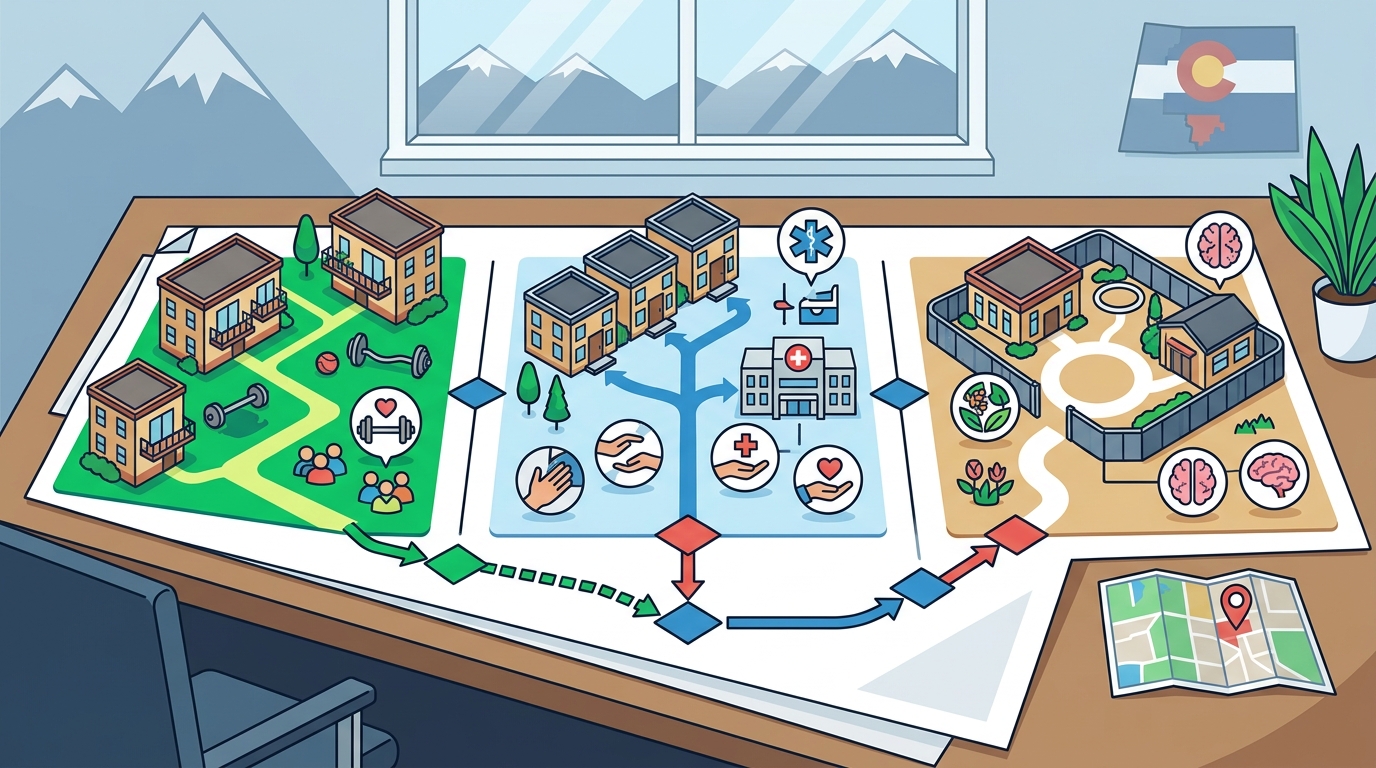
Independent living is a type of senior housing designed for active, self-sufficient older adults who want the convenience of community life without hands-on care. Residents typically enjoy private apartments, chef-prepared meals, housekeeping, and social programming. There is no nursing or personal care staff on hand for daily tasks.
This option works best when your parent is healthy and mobile but ready to trade home maintenance for a more connected lifestyle. Communities in Highlands Ranch and surrounding South Denver neighborhoods offer vibrant independent living environments with fitness centers, libraries, and planned activities.
What Is Assisted Living?
Assisted living is a residential senior care option for older adults who are generally independent but need regular help with activities of daily living such as bathing, dressing, medication management, and meals. Staff are available around the clock, and each resident receives a personalized care plan.
According to the National Center for Assisted Living, nearly 60% of assisted living residents need help with three or more daily activities. Assisted living strikes a balance between support and independence, making it the most common starting point for families exploring senior care. If you are unsure whether this fits your parent, our South Denver senior living guide can help you understand local options.
What Is Memory Care?
Memory care is a specialized form of senior living designed for individuals diagnosed with Alzheimer's disease or other forms of dementia. These communities provide 24/7 trained staff, secured environments to prevent wandering, and structured daily routines built around cognitive engagement.
How Memory Care Differs From Assisted Living
While both offer help with daily tasks, memory care adds enhanced security features like keypad entry and locked exits, dementia-specific therapies, and higher staff-to-resident ratios. If your loved one has begun wandering, showing confusion in familiar settings, or missing medications consistently, memory care may be the appropriate step. Learn more about the distinction in our post on memory care vs. assisted living in Douglas County.
When to Consider Memory Care
A dementia diagnosis does not always mean memory care is needed immediately. Many people with mild memory loss thrive in assisted living first. The transition typically happens when safety becomes a daily concern or behavioral changes like aggression or exit-seeking begin to appear.
Side-by-Side Comparison Table
| Feature | Independent Living | Assisted Living | Memory Care |
|---|---|---|---|
| Best for | Active, self-sufficient seniors | Seniors needing help with daily tasks | Seniors with Alzheimer's or dementia |
| Personal care assistance | None | Yes, personalized care plans | Yes, plus cognitive support |
| Staff availability | Minimal (maintenance/dining) | 24/7 caregiving staff | 24/7 dementia-trained staff |
| Security level | Standard residential | Emergency call systems | Secured entries, wandering prevention |
| Social programming | Fitness, outings, clubs | Activities plus wellness programs | Structured, therapeutic activities |
| Typical living space | Private apartment or cottage | Private or semi-private suite | Private or semi-private secured suite |
| Medication management | Self-managed | Staff-administered | Staff-administered with oversight |
How to Decide Which Level of Care Fits
Start With Your Parent's Daily Reality
Ask yourself: Can my parent safely manage meals, medications, and personal hygiene without daily help? If the answer is no, independent living is likely not enough. If they need hands-on assistance but are cognitively sharp, assisted living is usually the right fit.
Watch for Safety Signals
Falls, missed medications, a kitchen fire, or getting lost driving are all signs that the current situation is not sustainable. These moments often push families into urgent searches. If you are in that situation right now, our intake form is the fastest way to connect with Curtis for same-day guidance.
Plan for What Comes Next
Many communities in the Denver area offer more than one level of care on the same campus. That means your parent could start in assisted living and transition to memory care later without relocating to a new community. This continuity of environment matters, especially for someone experiencing cognitive changes.
Who Helps Denver Families Compare These Options?
This is where most families get stuck. Online directories give you lists, but they do not tell you which community is the right fit for your parent's specific needs, budget, and personality. That is exactly what a senior placement advisor does.
Harbor Senior Placement is a local service in South Denver that helps families compare assisted living, memory care, independent living, skilled nursing, and rehab options. Curtis, the founder, personally meets with every family and visits the communities himself. There is no call center, no database reading, and no pressure.
The service is completely free for families. Harbor Placement is compensated by the senior living communities, so your family pays nothing for the guidance. Whether you are planning ahead or making a decision after a hospital discharge, Curtis walks you through every step, from understanding care levels to preparing for your first community tour.
Key Takeaways
- Independent living is for active seniors who want community life without personal care assistance.
- Assisted living provides daily help with bathing, dressing, meals, and medication while preserving independence.
- Memory care offers 24/7 dementia-trained staff, secured environments, and structured cognitive programming.
- Many Denver-area communities offer multiple care levels on one campus, allowing seamless transitions.
- A local senior placement advisor like Harbor Senior Placement can compare options for your family at no cost.
- Urgent situations like a fall, hospital discharge, or new dementia diagnosis are common starting points for a care search.
- Curtis at Harbor Placement personally guides every family through the process in the South Denver area.
Frequently Asked Questions
What is the main difference between assisted living and memory care?
Assisted living helps with daily activities like bathing and medication for seniors who are mostly independent. Memory care adds 24/7 supervision, secured environments, and dementia-specific therapies for individuals with Alzheimer's or other cognitive conditions.
Does independent living provide medical care?
No. Independent living communities focus on lifestyle, convenience, and social engagement. They handle housekeeping and dining but do not offer hands-on nursing or personal care services.
How do I know if my parent needs memory care or assisted living?
If your parent is wandering, frequently confused, missing meals or medications, or showing behavioral changes related to cognitive decline, memory care may be the right step. A placement advisor can help you evaluate the signs and visit appropriate communities.
Is there a cost for using Harbor Senior Placement?
No. Harbor Senior Placement is completely free for families. The service is paid by the senior living communities, so you receive expert guidance without any fees.
What areas does Harbor Senior Placement serve?
Harbor Placement serves South Denver and surrounding Colorado communities, including neighborhoods in Douglas County, Highlands Ranch, Littleton, and nearby areas.
Can Harbor Placement help during a hospital or rehab discharge?
Yes. Many families reach out during urgent moments like a hospital discharge or a fall. Curtis can begin working with your family the same day you make contact to identify appropriate placement options quickly.
What if my parent's needs change after they move in?
Many senior living communities offer multiple care levels on one campus. If your parent starts in assisted living and later needs memory care, they can often transition without moving to a completely new location. Harbor Placement considers this when recommending communities.
How do I get started with Harbor Senior Placement?
The easiest way to begin is to fill out the online intake form or visit the contact page to reach Curtis directly. There is no obligation and no pressure.
Ready to Compare Your Options?
If you are trying to figure out the right level of care for a parent in the Denver area, you do not have to sort through it alone. Learn how Harbor Senior Placement works and connect with Curtis today for free, personalized guidance from someone who knows these communities firsthand.